
I-Corps
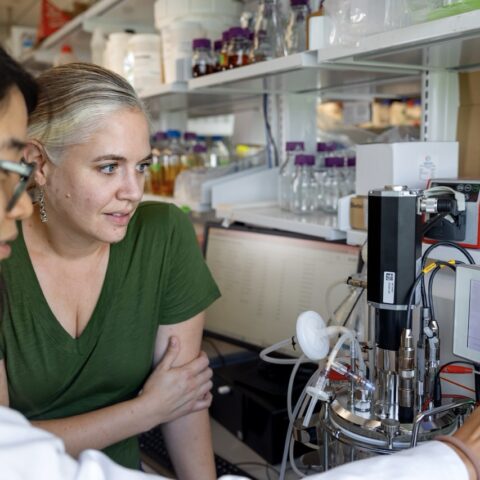
Cornell-based startup REEgen, co-founded by Alexa Schmitz, Ph.D. ’18, Sean Medin, Ph.D. ’24, and Brooke Pian ’13, has been awarded a $200,000 Innovation Matching Grant (IMG) from Empire State Development’s Division of Science, Technology and Innovation (NYSTAR). The funding will help accelerate the commercialization of the company’s BioREEcover technology, a cleaner and more sustainable approach to recovering rare earth elements, also known as REEs, which are critical materials used in technologies like electric vehicles, wind turbines, smartphones, and solar panels. Despite their importance, the process used to extract and refine rare earth elements is often costly, energy intensive, and environmentally damaging, with much of the global supply sourced overseas. REEgen is working to change that. The startup uses engineered bacteria, an innovation developed at Cornell University, to recover critical metals from ores and unconventional feedstocks efficiently and economically, without harsh chemicals or high heat. Their mission is to revitalize critical mineral recovery and enable a future of widespread energy security. The IMG award was granted in connection with REEgen’s $1,112,040 National Science Foundation SBIR Phase II project and will help accelerate the company’s path from pilot-scale operations to commercial deployment of its BioREEcover technology. The funding will support commercialization efforts, intellectual property strategy, and business development activities, all critical steps in scaling a resilient domestic supply chain for rare earth elements. “Support from the NYSTAR Innovation Matching Grants program comes at a pivotal moment for REEgen,” said CEO Schmitz. “These funds will help us lock in key commercial partnerships by launching our first on-site BioREEcover unit. Empire State Development and its programs have made the State of New York a great place for REEgen to commercialize its technology.” BioREEcover replaces some of the most environmentally harmful stages of rare earth recovery, creating a cleaner process while improving access to materials that are foundational to clean energy technologies. By reducing environmental impact and strengthening domestic production, REEgen’s innovation supports both sustainability goals and national energy security. Empire State Development President, CEO, and Commissioner Hope Knight emphasized the broader impact of investments like this. “Under Governor Hochul’s leadership, New York continues to make strategic investments that nurture and grow the innovation economy all throughout the state,” said Knight. “By leveraging state funding with federal research grants, we are helping New York’s small businesses move from concept to commercialization quicker, creating companies, jobs and new industries.” REEgen’s success reflects the growing strength of New York’s cleantech and advanced materials ecosystem, as well as the role of programs like I-Corps training in helping researchers translate breakthrough innovations into real-world impact. As demand for critical minerals continues to rise, startups like REEgen are proving that the future of energy security can also be cleaner, smarter, and built closer to home.
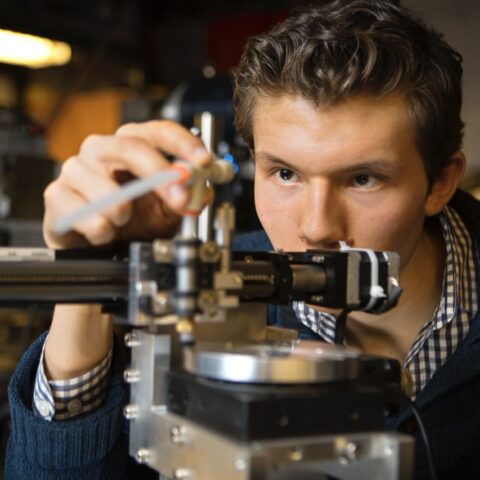
Startup ventures emerging from I-Corps teams welcomed a total of 119 new paid employees during the year. Alumni secured $16,617,873 in SBIR and STTR awards and raised $29,713,562 in capital to support research, commercialization progress, and long-term scaling.

Safe Pro AI, co-founded by Binghamton University alumni Jasper Baur and Gabriel Steinberg, is a Safe Pro Group company leveraging AI and machine learning to detect, label, and map mines and unexploded ordnance (UXO).
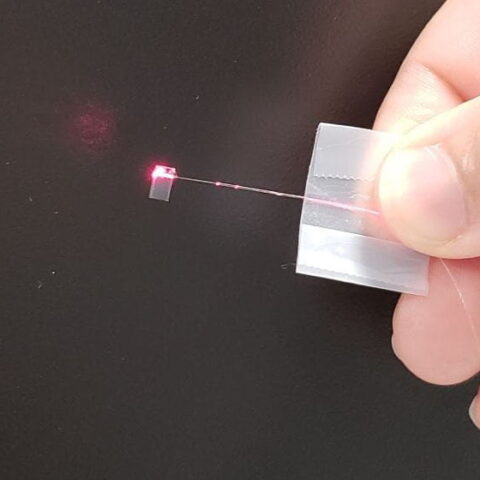
Photonect Interconnect Solutions, an I-Corps alumni company, recently secured a $274,996 Small Business Innovation Research (SBIR) Phase I award from the National Science Foundation (NSF) for its photonic technology.

Exotanium, an I-Corps alumni startup offering a cloud resource optimization and management platform, announced in November that it secured $12 million in a Series A funding round led by Cambium Capital and Celesta Capital.

Iconic Air, founded by West Virginia University alumni Kyle Gillis and James Carnes, closed on a $5 million seed funding round.