Cornell University

Center for Regional Economic Advancement

We support and empower people to start and grow new ventures

Rev: Ithaca Startup Works

June 9, 2026

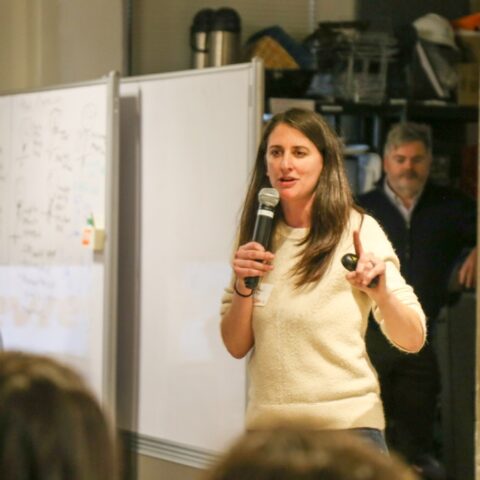
What started as a research idea inspired by environmental issues on a family farm has grown into Eutrobac, a New York-based agricultural technology startup acquired by Agriment Services, Inc. (ASI) in April. As a participant in Rev: Ithaca Startup Works’ Protofacturing and Manufacturing Hardware Accelerator programs in 2024 and 2025 respectively, Eutrobac developed the company’s NutriFilter™ technology, which helps livestock operations manage nitrogen pollution and prevent costly mineral buildup in waste systems. For co-founder Ellie Sangree, the idea behind the technology began years earlier. “I grew up on a farm and was acutely aware of the environmental issues that come from farming,” Sangree said. “Farming is one of the most significant ways humans impact the environment.” While studying environmental science in college, Sangree began researching ways to remediate polluted water systems and discovered a gap in existing nitrogen removal methods. After approaching a professor for lab space and mentorship, she began testing a biological filtration system that eventually became the foundation for NutriFilter™. “Lo and behold, I invented this technology, tested it in a series of experiments, and it ended up working really well,” Sangree said. After joining the company, co-founder Jesse Wexler focused on commercializing the technology and identifying where it could have the greatest impact. Through participation in the American Farm Bureau I-Corps conference course in 2024, and the National I-Corps program in 2025, the team conducted customer discovery interviews and held conversations with hundreds of farmers, which led the team to realize the technology’s strongest use case was within livestock agriculture, particularly swine operations. From there, the company shifted its focus toward engineering a scalable product that could meet industry needs. Wexler credits Rev’s accelerator programs with helping to bridge the gap between concept and commercialization. “The obvious next step was to engineer the product to fit what those customers needed, and that’s what Rev does,” he said. Through Rev’s Protofacturing and Manufacturing Hardware Accelerator programs, Eutrobac refined its product design, conducted pilot testing across upstate New York, and gathered the technical data needed to continue scaling the company. Along the way, the startup also won the New York Business Plan Competition and raised a $160,000 pre-seed funding round backed by New York state investors and angel funding. ASI was drawn not only to the technology itself, but also to the team behind it. As part of the acquisition, Sangree will continue supporting development efforts in a consulting role while completing her PhD, and Wexler has joined ASI full time as Vice President of Sales and Marketing. The founders say the acquisition represents both a business milestone and proof of what startup support systems can make possible for early-stage hard tech companies. “Without what Rev does, what Cornell does with the I-Corps program, and what the New York startup ecosystem does, we wouldn’t have been able to scale properly,” Wexler said. Looking back on the company’s journey, the founders describe the experience as a rapid progression from invention to commercialization. Eutrobac’s acquisition highlights the growing impact of hard tech and manufacturing-focused startups emerging from upstate New York and reflects the role accelerator programming can play in helping early-stage companies scale innovative technologies into commercial markets.
June 9, 2026

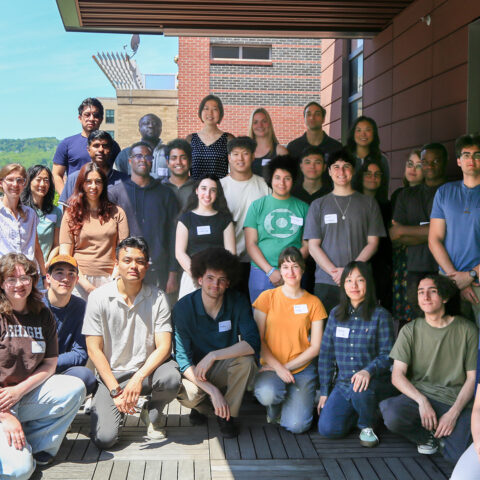
Rev: Ithaca Startup Works is thrilled to welcome the newest cohort of entrepreneurs joining Rev’s summer Prototyping Hardware Accelerator. The 10-week program helps early-stage product teams transform initial “back of the napkin” ideas into fully developed startups ready for launch. Participants join one of four tracks: Classic, ClimateTech, AgTech, or MedTech. Each track provides targeted support along with access to mentors and experts who bring deep industry knowledge. As teams develop their prototypes, they work through key questions about whether their ideas are commercially desirable, technologically feasible, and economically viable. Every team receives a stipend of up to $2,000 to support prototype development during the program. By the end of the accelerator, participants are prepared to expand their teams, pursue manufacturing and partnership opportunities, and begin engaging investors.  “Getting a new product started is a process – and it starts with getting out of Rev: Ithaca Startups Works and figuring out what people need to solve a problem. This year’s group has taken that to heart – just a week in and we are hearing customer feedback across the board – and their prototypes are already coming to life because of it,” said Deanna Kocher, Associate Director of Hardware Programs.    16 teams will explore the fundamentals of early-stage startup development, from customer discovery to formal pitch training. Cohort members gain access to a series of speakers, workshops, and field trips to help them grow their network of thought leaders, industry experts, and successful startups. Each startup in the Prototyping Hardware Accelerator has been paired with an experienced business mentor and gain access to a team of hardware engineers to assist with developing physical products.    “This group hit the ground running from the very first day and hasn’t slowed down. Across every sector of consumer, Medtech, and Agtech, teams are already deep in prototyping with our engineering team, and engaging with potential customers in ways that are shaping their product to address market needs in real time,” said Heisen Kong, Product Development Engineer at Rev: Ithaca Startup Works.   Classic Track Hardware Accelerator   Open to all innovators in any field since 2014, Rev’s classic track provides foundational training across industries.    Meet the startup teams from the Classic Track:     Case: Franklin Berry ’26, is creating a phone case that allows users to play pc level games on the move. CASE provides more games, storage, battery, access, capability, and convenience.   MechSense Labs: Founders Kevin Navarro, Cristian Garcia, and Hamdi Korreshi are creating solutions focused on autonomous rover and drone techstacks that offer a modular solution towards any surveying and environmental mapping need.   Ocho Labs: Founder Olivia Cho is developing Veila a wearable accessory that protects against mosquitoes without sacrificing style. Designed to look and feel like fine jewelry, it offers a discreet, effective alternative to sprays, lotions, and bulky devices.  “I love food, I love being outside, and in the summer those two things come together perfectly — except for the mosquitoes. Every product out there today makes you choose. Pick something that works or something you’d actually want to wear. Nothing does both.” said founder Olivia Cho.  PadKey: Chukwudi Owo is creating a hardware input device designed to make computer control more portable, private, and flexible.   PaShield: Suby Valluri ’26, Mercy Akande, and Brandon Fagiolo are creating a privacy-sensitive AI wearable that detects real-world environmental risks locally and provides calm in-the-moment cues or trusted alerts. It helps users stay safer without relying on screens, constant GPS tracking, or continuous surveillance.  Pup Train: Founder Sami Arthur is designing a dish bowl that will expand and collapse with a push of a button.  Quotaquom: Founder Frederick O. Mensah, DrumLatch provides a retrofittable, IoT-enabled hardware lock that integrates with machine drums to offer remote access control, real-time tampering alerts, and usage tracking.  TinSense: Quang Nguyen ‘26, is creating a system of thin, adhesive sensors applied directly to the tin and boundary lines of squash courts that detect ball contact. When triggered, these sensors produce immediate audio-visual signals to indicate an out-of-bounds hit.  Upright: Doris Xu, Ph.D. ’28, is creating a drone-based solution that runs overnight to update the inventory in warehouses (or retail stores and supermarkets) to reduce the time it takes to catch latency.   Zynect: Cornell alumni Conner Carpenter, Vel Pendell, and Victor Aprea, are creating the Leakmote which identifies liquid leaks in industrial and residential facilities and notifies the customer so they can take action.    AgTech Prototyping Hardware Accelerator    Rev: Ithaca Startup Works is excited to introduce the fourth annual AgTech track cohort. After completing the accelerator, AgTech participants are eligible to take part in the Grow-NY Food and Ag Business Competition, where startups can compete for up to $1 million in funding and continue developing solutions that strengthen the regional agrifood system.   Meet the startup teams participating in the AgTech Track:   Clover Robotics: Cornell researchers Katrina Davis, Leah Lackey, Stephan Wagner, and Jessica Pagán, Ph.D., are designing an affordable robot that helps farmers manage competition between cash crops and companion plants in intercropped fields. Using low-cost sensors and computing systems, the team aims to make precision agriculture tools accessible to small-scale and lifestyle farmers.  Ficio: Youhanna Meleka M.Eng ’27, David Farag, and Ahmed Rashad are creating fully autonomous kitchen systems that can prep, cook, and serve restaurant-quality meals. By combining robotics and automation, the team aims to increase food production efficiency and make high-quality meals more accessible at scale.  LactiQ Intel: Cornell researchers Merve Kosesoy, MBA ‘26, Adrian Zane Judinarine ’29, Hongjin Fang, Sumit Sharma, and Allen James Vinoy ’26 are developing a low-cost adhesive wearable biosensor patch for dairy cows. Using temperature, activity, and behavioral signals, farmers are able to monitor their cows’ health.   “We hope to accelerate development of our first working prototype, receive mentorship from experienced engineers and hardware experts, validate technical feasibility, and build a stronger roadmap toward pilot testing on farms,” said Merve Kosesoy, founder of LactiQ Intel.   MedTech Prototyping Hardware Accelerator   The MedTech track welcomes medical device startups supported by a $2 million “Build to Scale” grant from the U.S. Economic Development Administration, along with a $2 million local match that includes $1 million from Empire State Development’s Division of Science, Technology and Innovation (NYSTAR). Participants in the MedTech track have access to design resources, specialized equipment, and faculty expertise through the university’s Meinig School of Biomedical Engineering and College of Human Ecology. Weill Cornell Medicine also contributes applicants and provides additional clinical and industry insight to support the program.   Meet the startup teams participating in the MedTech Track:    NuBiru Inc.: Founded by Nicole Levi, NuBiru is developing a hydrogel made from materials produced by probiotic bacteria to prevent the formation of harmful bacterial biofilms. Designed for applications in wound care, medical devices, agriculture, and water systems, the technology aims to improve human health by reducing the risks associated with biofilm growth.  Olive Branch Exploration Corporation (OBEC): Led by Ellie Loehr and a multidisciplinary team of researchers and students, OBEC is developing an automated injection system designed for spaceflight applications. Built for autonomous operation in microgravity environments, the technology prioritizes crew safety, reliability, and ease of use while undergoing rigorous testing and validation under mission-relevant conditions.  Sanova Tech: Andrés Moreno and Melissa Fischer are developing a patient-centered wearable device for large-volume at-home drug delivery, paired with continuous biomarker monitoring. The system aims to make treatment more convenient while enabling earlier detection of health changes, personalized therapy adjustments, and real-world data collection to support healthcare providers and pharmaceutical development.  “Beyond prototyping, we hope to gain hands-on hardware development support, technical validation, strategic mentorship, and access to a strong innovation ecosystem that can help us refine our product, strengthen commercialization readiness, and prepare for future fundraising and scaling,” said Andres Moreno founder of Sanova Tech.    The Prototyping Hardware Accelerator culminates in Networking@Rev: Prototyping Demo Day, a networking event where each team will have the chance to demonstrate their progress and pitch their product to community members, potential investors, and partners. This event is free and open to the public and takes place on July 30th at Rev: Ithaca Startup Works. Tickets can be reserved here.     Get to know the teams more and follow along with their prototyping journeys on Rev’s Instagram and LinkedIn channels.    
April 22, 2026

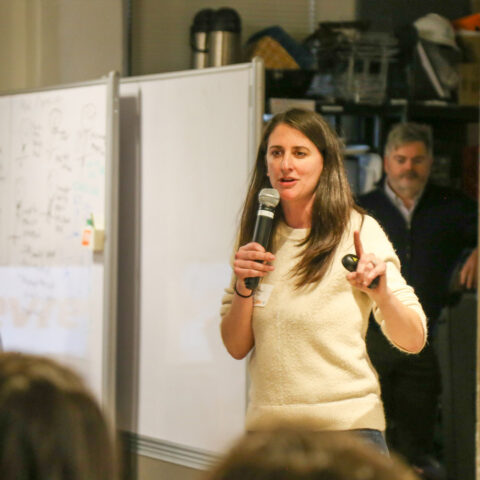
SimpliFed, a Rev member and the leading virtual Maternal Health Operating System for pregnancy and postpartum, recently raised over $10 million in a series A funding round.

April 17, 2026

Forty-two startups were supported by Rev: Ithaca Startup Works in 2025, marking another successful year for their founders, employees, and investors. Some forged new partnerships, many secured seed funding, and others earned notable awards.
April 9, 2026

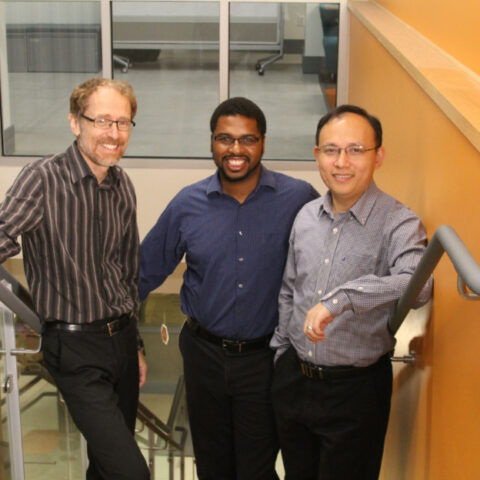
Exostellar, a startup born from Cornell research, has achieved an outcome many entrepreneurs dream of – acquisition by a Fortune 500 company. Qualcomm acquired Exostellar, launched in 2018 by computer science professors Hakim Weatherspoon and Robbert van Renesse and former postdoctoral researcher Zhiming Shen, Ph.D. ’17, in March.
February 25, 2026

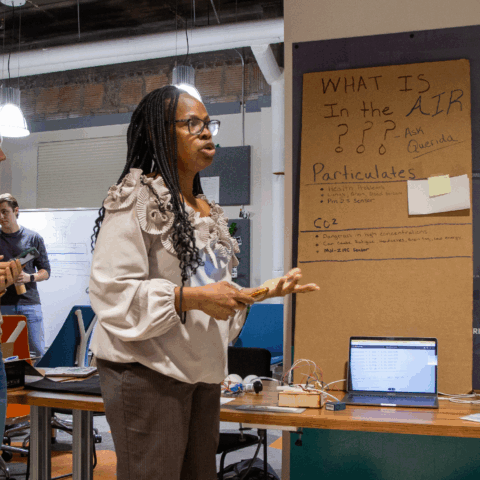
Rev: Ithaca Startup Works is excited to announce the 20 startups making up the sixth Manufacturing Hardware Accelerator cohort. The accelerator helps teams turn their advanced prototypes into manufactured products. Participants gain access to business mentorship, connections to local manufacturers, and introductions to investors.
September 23, 2025

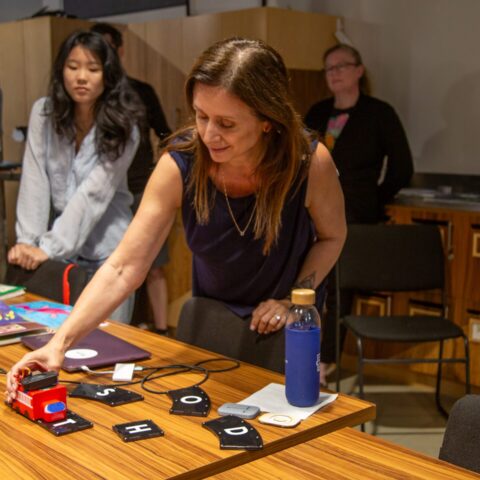
Consisting of 28 teams and over 50 individuals, this cohort brings together inventors and entrepreneurs from a wide variety of industries, from pet health to urban hydroponic agriculture.
July 29, 2025

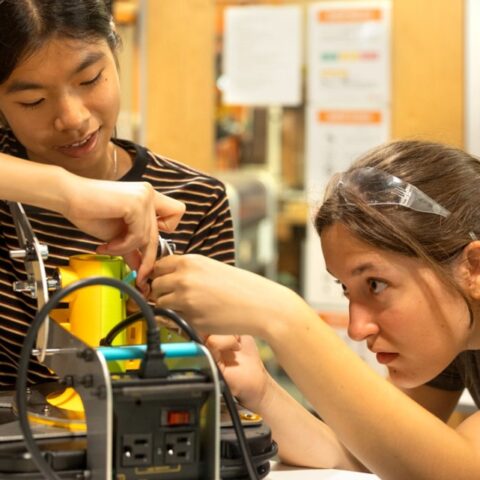
When they were seniors at Ithaca High School last year, Isabelle Cohen, Alex Elia and Jennifer Zhao hated seeing the plastic waste pile up from the 3D printer in their school’s makerspace, with no way to recycle it.

June 10, 2025

Over 10 weeks, Rev’s Prototyping Hardware Accelerator guides product teams from a “back of the napkin idea” to a fully-fledged startup. Teams participate in either the Classic, ClimateTech, AgTech, or MedTech tracks, where they gain access to experts in their industry’s field.

March 7, 2025

The numbers are trickling in for 2024, another successful year for the founders, employees, and investors of Rev: Ithaca Startup Works 32 member startups. Success looked different for our Rev members as some accepted new partnerships, some closed rounds of seed funding, and others continued to innovate. Regardless, Rev’s community continued to grow and scale their businesses while positively impacting the Ithaca region and beyond.